In the pilot episode of Twin Peaks, David Lynch masterfully captures the mundane rhythms of everyday life in a high school setting. A girl sneaks a cigarette, a boy is summoned to the principal's office, and a teacher takes attendance. The scene shifts abruptly when a police officer enters the classroom and whispers to the teacher. A scream pierces the air, and through the window, a student is seen running across the courtyard. The teacher struggles to hold back tears, signaling an impending announcement. Lynch's camera then focuses on an empty seat, as two students exchange a knowing glance, realizing their friend Laura Palmer is dead.
Lynch's work is renowned for its meticulous attention to surface-level details, yet he always delves deeper, uncovering the unsettling undercurrents that lie beneath. This scene from Twin Peaks encapsulates the thematic essence of his career, blending the ordinary with the extraordinary. However, it's just one of many iconic moments in Lynch's extensive body of work spanning over four decades. Each fan might have a different favorite, reflecting the diverse appeal of his singular voice.
The term "Lynchian" has become synonymous with an unsettling, dream-like quality that defies easy categorization. It's a testament to Lynch's unique contribution to cinema and television, much like "Kafkaesque" describes a broader, disorienting experience. The difficulty in accepting his passing lies in the loss of such a distinctive artist whose work resonates differently with each viewer.
For budding film enthusiasts, watching Eraserhead was a rite of passage. Decades later, the same ritual was passed down to the next generation, as Lynch's teenage son and his girlfriend independently began binge-watching Twin Peaks, reaching the Windom Earle era of Season 2.
Lynch's work has a timeless quality, often blending the odd with the nostalgic. In Twin Peaks: The Return (2017), he designed a bedroom for a young character that harked back to 1956, complete with cowboy trimmings, reflecting his own childhood. Yet, this nostalgic setting is juxtaposed with a surreal, dystopian world featuring clones and violent alter egos.
Despite the Hollywood trend of reviving nostalgic content, Lynch's approach in The Return was anything but conventional. He deliberately avoided bringing back key characters from the original series, staying true to his un-Lynchian ethos. When Lynch did adhere to Hollywood norms, as with Dune, the result was a unique blend of his signature style and the film's epic narrative, complete with bizarre imagery like a cat/rat milking machine.
Lynch's films often contain a haunting beauty, as seen in The Elephant Man, which, while close to mainstream appeal, remains deeply moving and set in a disturbingly real historical context. This blend of beauty and disquiet is quintessentially "Lynchian."
Attempting to categorize Lynch's work into genres or tropes is futile, yet his films are instantly recognizable. His fascination with the world beneath our own, often revealed through literal or metaphorical curtains, is a recurring theme. Blue Velvet exemplifies this, with its noir-like plot set against a backdrop of mid-century Americana, revealing a darker, surreal underbelly.
Lynch's influence extends to a new generation of filmmakers. From Jane Schoenbrun's I Saw The TV Glow, inspired by Twin Peaks, to Yorgos Lanthimos's The Lobster, which scrutinizes societal norms, the "Lynchian" influence is evident. Other notable works include Robert Eggers' The Lighthouse, Ari Aster's Midsommar, David Robert Mitchell's It Follows and Under the Silver Lake, Emerald Fennell's Saltburn, Richard Kelly's Donnie Darko, Rose Glass's Love Lies Bleeding, and even Quentin Tarantino's homages. Denis Villeneuve's early films like Enemy and Maelstrom also bear the mark of Lynch's otherworldly style.
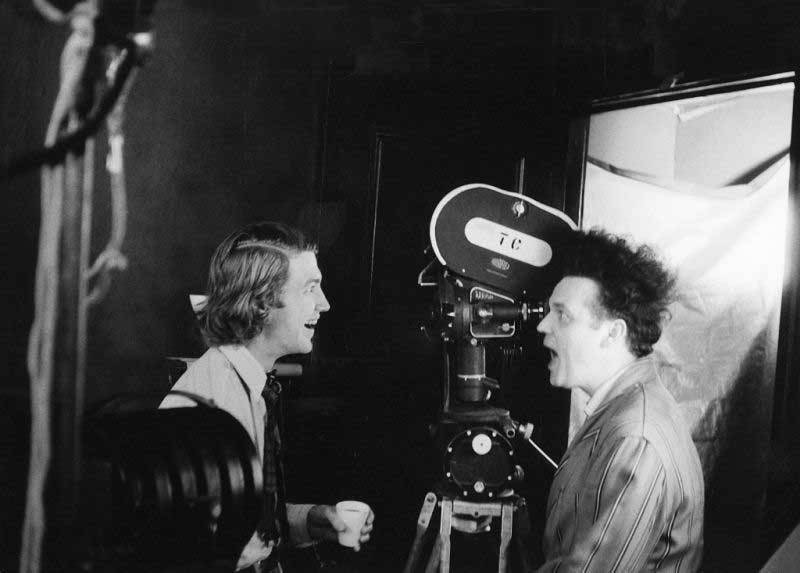
David Lynch may not be everyone's favorite filmmaker, but his impact on cinema is undeniable. As an artist who bridged the gap between past and future, his legacy lies in the "Lynchian" elements that continue to inspire and challenge filmmakers today and tomorrow.

 LATEST ARTICLES