
The Yakuza series, now known as Like a Dragon, has broadened its appeal to welcome a more diverse audience, including younger gamers and women. Yet, the creators remain committed to its core theme: stories about 'middle-aged men' doing what middle-aged men do.
Like a Dragon Devs Stay True to Their Roots, Focusing on 'Middle-Aged Dudes'
The Essence of 'Middle-Aged Guys' Doing 'Middle-Aged Guy Things'

The Yakuza franchise continues to win over fans across the globe. With the endearingly eccentric ex-yakuza protagonist Ichiban Kasuga at the helm, the series has attracted a wide-ranging fanbase. Despite this surge in popularity, the developers recently reaffirmed their intention to preserve the series' original spirit.
"We're genuinely thrilled and thankful to have gained so many new fans, including women," series director Ryosuke Horii told AUTOMATON. "But we don't intend to deliberately shift our dialogue topics just to appeal to them. Doing so would mean we could no longer authentically discuss things like uric acid levels."
Horii, alongside lead planner Hirotaka Chiba, stressed that the unique appeal of Like a Dragon stems from its focus on "middle-aged guy things"—a perspective they share as middle-aged men themselves. From Ichiban's passion for Dragon Quest to the characters' frequent complaints about back pain, they believe "this sense of 'humanity' tied to their age is what gives the game its originality."
"The characters are fleshed-out people, much like our players, so their struggles feel relatable," Horii added. "That's why it's easy to become immersed in the game, feeling as if you're listening in on conversations between real people."

In a 2016 Famitsu interview, series creator and general director Toshihiro Nagoshi expressed surprise at the rising number of female players. "What was unexpected was the increase in female players. Currently, about 20% are women," he said, according to Siliconera.
While Nagoshi viewed this as a positive trend, he clarified that Yakuza was fundamentally crafted with a male audience in mind. "Yakuza is made for male players," he explained. "So we must be careful not to become overly conscious of female users and stray from what we set out to create."
Debate Over Female Representation in the Like a Dragon Series
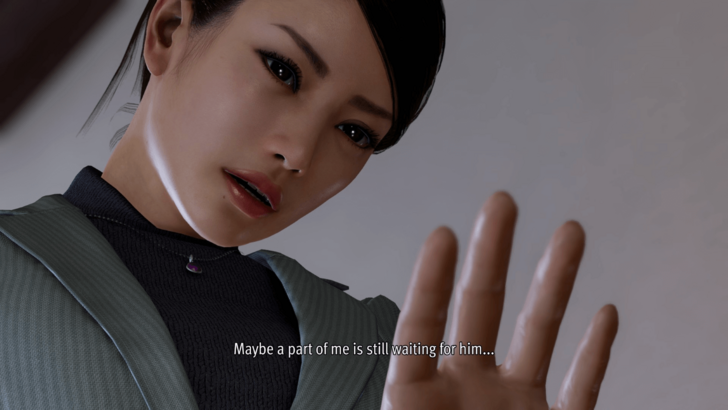
Despite its target demographic, the series' portrayal of female characters has drawn criticism. Some fans argue that it often relies on sexist stereotypes, with women frequently sidelined to supporting roles or objectified by male characters.
A ResetEra user observed that while the franchise has evolved, "female representation remains lacking, and many in-game tropes and scenarios are sexist." Another commenter noted, "Even in Yakuza 7, Saeko is the only permanent female party member (Eri being optional). Plus, whenever a woman appears on screen, the male characters often default to suggestive or sexual comments, as if that's the only way they know how to interact with women."
Many female characters fit the damsel-in-distress archetype, as seen with Makoto in Yakuza 0, Yumi in Kiwami, and Lilly in Yakuza 4. This trend of marginalizing women appears persistent. Chiba humorously acknowledged this in the interview, stating, "In Infinite Wealth, there's a Party Chat where Seonhee and Saeko's private conversation gets taken over by Nanba and turns into guy talk. I think situations like that will keep occurring."

While the series has moved toward more progressive values, it sometimes reverts to outdated, sexist clichés. Despite these occasional missteps, the recent titles mark a positive evolution.
This progress was recognized by Game8, which awarded Like a Dragon: Infinite Wealth a score of 92. The review hailed it as a "love letter to long-time fans while brilliantly charting the future course for the series." For a detailed analysis, check out our review below!

 LATEST ARTICLES