Heim Nachricht "Ich könnte" Fart Fart Boobie Fart: Das Spiel "" und vielleicht würde es irgendwann abgenommen werden " - Devs zeigen, warum die Konsolen in 'Eslop' ertrinken '

"Ich könnte" Fart Fart Boobie Fart: Das Spiel "" und vielleicht würde es irgendwann abgenommen werden " - Devs zeigen, warum die Konsolen in 'Eslop' ertrinken '

Feb 25,2025 Autor: Hannah

Der PlayStation Store und Nintendo ESHOP erleben einen Zustrom von Spielen mit geringer Qualität, die oft als "Slop" bezeichnet werden, und die Bedenken der Benutzer auswirken. Diese Spiele verwenden häufig generative KI für irreführende Marketingmaterialien und können ihre Versprechen häufig nicht einhalten. Dieses Problem, das zunächst auf dem ESHOP bekannt ist, hat sich kürzlich auf den PlayStation Store ausgeweitet, insbesondere auf den Abschnitt "Spiele zur Wunschliste".

Spiel Das Problem ist nicht nur das Vorhandensein von schlechten Spielen. Es ist das überwältigende Volumen an auffallend ähnlichen Titeln mit niedrigem Effort, oft Simulationsspiele, ständig reduziert und nachgeahmte beliebte Spielthemen oder sogar Namen. Ihr Marketing verfügt häufig über hyperstylisierte, mit AI-generierte Kunst, die wenig Ähnlichkeit mit dem eigentlichen Gameplay aufweist, das in der Regel von schlechten Kontrollen und technischen Problemen geplagt wird. Eine kleine Anzahl von Unternehmen scheint für diese produktive Leistung verantwortlich zu sein, was es schwierig macht, sie zu identifizieren und zur Rechenschaft zu ziehen, da es an leicht verfügbaren öffentlichen Informationen mangelt.

Die Beschwerden der Benutzer haben sich verstärkt, insbesondere in Bezug auf die sich verschlechternde Leistung des Eshop aufgrund der schiere Anzahl von Spielen. Um zu untersuchen, untersucht dieser Artikel den Veröffentlichungsprozess für Spiele in den wichtigsten Storefronts (Steam, Xbox, PlayStation, Nintendo Switch) und warum einige Plattformen stärker betroffen sind als andere.

Der Zertifizierungsprozess

Interviews mit acht Game Development- und Verlagsprofis (alle forderten Anonymität) enthüllten Einblicke in den Veröffentlichungsprozess für Spiele. Im Allgemeinen stellen Entwickler ihre Spiele auf Plattforminhaber (Nintendo, Sony, Microsoft, Valve) ein und erhalten Zugang zu Entwicklungsportalen und Devkits (für Konsolen). Anschließend führen sie Formulare aus, in denen die Spielspezifikationen detailliert werden und sich einer Zertifizierung ("Cert" unterziehen, wobei der Plattforminhaber die Einhaltung der technischen Anforderungen, rechtlichen Standards und ESRB -Bewertungen überprüft. Die Altersbewertungen werden besonders geprüft.

Im Gegensatz zur landläufigen Meinung ist die Zertifizierung keine Qualitätsüberprüfung (Qualitätssicherung). Es konzentriert sich auf die technische Einhaltung und nicht auf die Qualität der Spiele. Plattforminhaber geben häufig ein begrenztes Feedback zu Einreichungsfehlern, insbesondere zu Nintendo.

STADE SEITE REVIEW

Plattforminhaber erfordern eine genaue Spieldarstellung im Speicher -Seiten -Screenshots, die Durchsetzung variiert jedoch. Während sich Nintendo und Xbox Review -Seite vor dem Start ändert, führt PlayStation einen einzigen Scheck in der Nähe von Start durch, und Valve überprüft nur die erste Einreichung. Während eine gewisse Sorgfalt vorhanden ist, um die Genauigkeit sicherzustellen, werden Standards lose definiert, sodass irreführende Inhalte durchlaufen werden können. Strafen für ungenaue Informationen umfassen in der Regel die Entfernung des beleidigenden Inhalts, nicht unbedingt das Spiel oder Entwickler. Entscheidend ist, dass keine der Storefronten der Konsole spezifische Regeln für die Verwendung von Generativen in Spielen oder Marketingmaterialien enthält, obwohl die Dampfanlage die Offenlegung verlangt.

Warum die Diskrepanz?

Die Ungleichheit in "Slop" über Plattformen hinweg beruht auf Unterschieden im Genehmigungsprozess. Microsoft VETS -Spiele individuell, während Nintendo-, Sony- und Valve Vet -Entwickler. Auf diese Weise können zugelassene Entwickler mehrere Spiele auf Nintendo und PlayStation problemlos veröffentlichen, was zum aktuellen Problem führt. Der Spiel-für-Spiel-Ansatz von Xbox macht es weniger anfällig. Ein Entwickler beschrieb Nintendo als "wahrscheinlich am einfachsten zu betrügen". Strategien wie ständig erweiterte Rabatte und Ausnutzung von Abschnitten "Neuveröffentlichungen" verschärfen das Problem weiter.

Obwohl generative KI zu diesem Thema beiträgt, ist es nicht die einzige Ursache. Das zugrunde liegende Problem ist das Volumen der Spiele mit niedrigem Effort, unabhängig von der KI-Verwendung. Die Xbox erscheint, obwohl es möglicherweise weniger wahrscheinlich ist, dass sie die KI -Verwendung in Zukunft entmutigen, aufgrund seiner Kuration und Erfindbarkeitsmerkmale weniger betroffen. Trotz einer großen Menge potenziell minderwertiger Spiele wird Steam aufgrund seiner überlegenen Such- und Sortieroptionen, der ständig erfrischenden neuen Veröffentlichungen und der bloßen Menge an Spielen weniger kritisiert. Im Gegensatz dazu fehlt Nintendos ESHOP, was zu dem Problem beiträgt.

Der Weg nach vorne

Benutzer haben Nintendo und Sony aufgefordert, das Problem anzugehen. Während Sony in der Vergangenheit Maßnahmen ergriffen hat, bleibt die langfristige Lösung ungewiss. Versuche, in der Gemeinschaftsgetriebene Filterung wie das "Better Eshop" von Nintendo Life zu filtern, wurden kritisiert, weil sie sich unfair gegen legitime Spiele richten. Es gibt Bedenken, dass eine strengere Regulierung versehentlich die Software für die Qualität schädigen könnte. Die Herausforderung besteht darin, die Notwendigkeit in Einklang zu bringen, ein irreführendes Marketing mit dem Potenzial zu verhindern, unabhängige Entwickler zu unterdrücken. Letztendlich spielt das menschliche Element bei der Überprüfung der Einreichungen eine bedeutende Rolle, was es schwierig macht, zwischen wirklich schlechten Spielen und absichtlichen Versuchen, das System auszunutzen, konsequent zu unterscheiden.

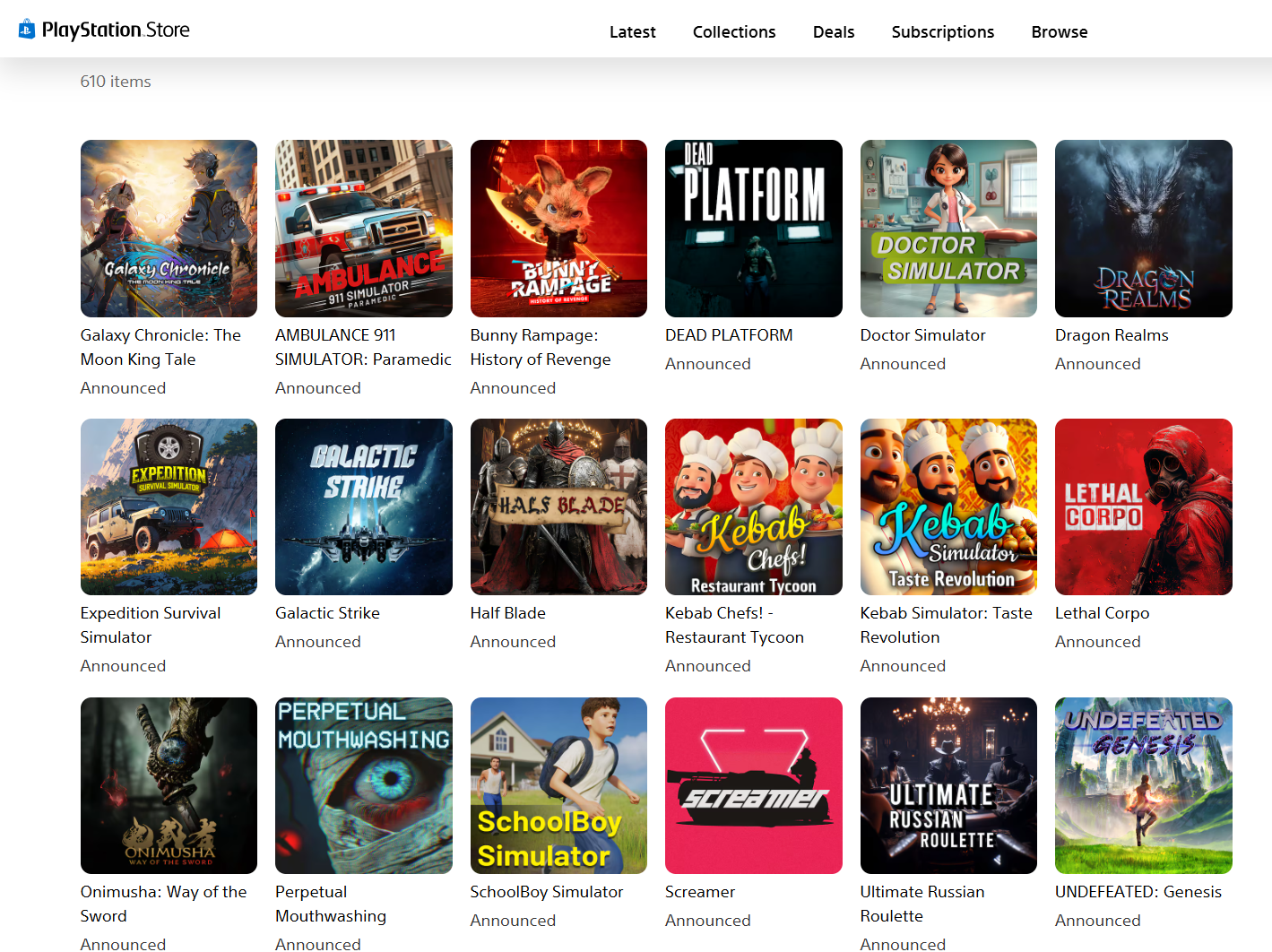
Der Abschnitt "Spiele zur Wunschliste" im PlayStation Store zum Zeitpunkt des Schreibens dieses Stücks.

Neueste Artikel

31

2026-03

As of now (October 2025), there is no official global standard or universally recognized "Raising Animals Codes" that govern animal raising practices across all countries or industries. However, various organizations, governments, and ethical frameworks have established guidelines, regulations, and codes of practice related to animal welfare, husbandry, and responsible animal raising. These are often referred to collectively as "animal codes" or "animal welfare codes" in agriculture, farming, and research. Below is a comprehensive overview of the key frameworks and standards that serve as de facto "Raising Animals Codes" in 2025, particularly in agriculture, livestock farming, and animal research: 🌍 1. Global Animal Welfare Standards (2025) These are internationally recognized codes developed by organizations to promote humane treatment of animals. ✅ World Organisation for Animal Health (WOAH) – Formerly OIE Role: Sets global standards for animal health and welfare. Key 2025 Guidelines: WOAH Terrestrial Animal Health Code – Includes animal welfare chapters on transport, slaughter, and farming practices. WOAH Animal Welfare Standards (Updated 2023–2025): Emphasis on freedom from pain, fear, and distress. Requirements for species-specific housing, handling, and veterinary care. Adoption by over 180 member countries. ✅ FAO (Food and Agriculture Organization of the UN) – 2025 Code of Practice for the Welfare of Farm Animals (2024 Update): Promotes sustainable livestock production. Encourages reduced antibiotic use, enriched housing, and on-farm welfare monitoring. Aligns with UN Sustainable Development Goals (SDG 12, 13, 14, 15). 🐄 2. Regional & National Raising Animal Codes (2025) Different regions have legally binding or voluntary codes. 🇪🇺 European Union – Animal Welfare Codes (2025) EU Animal Health Law (2021–2025 Enforcement): Banned conventional battery cages for laying hens (2025). Mandated free-range systems for poultry, indoor-outdoor access for pigs and cattle. The Five Freedoms (EU Standard): Freedom from hunger and thirst. Freedom from discomfort. Freedom from pain, injury, or disease. Freedom to express normal behavior. Freedom from fear and distress. 🇺🇸 United States – National Animal Welfare Act (2025 Amendments) USDA Animal Care Regulations: Enforced under the Animal Welfare Act (AWA), updated in 2023–2025. Covers farm animals (except poultry and farmed fish, which are not under AWA). Key 2025 Changes: Stricter standards for cattle, pigs, and sheep in transport and slaughter. New requirements for enriched housing, veterinary access, and on-farm welfare audits. Adoption of animal welfare labeling (e.g., "Humane Certified", "Animal Welfare Approved"). 🇨🇦 Canada – Canadian Code of Practice for the Care and Handling of Farm Animals (2025) Developed by the National Farm Animal Care Council (NFACC). Updated for dairy, beef, swine, poultry, and equine. Includes science-based thresholds for pain, stress, and housing conditions. Used by provinces to guide farm regulations. 🐷 3. Certification & Labeling Programs (2025) These are "practical codes" adopted by farmers and retailers to demonstrate ethical animal raising. Certification Key 2025 Standards Animal Welfare Approved (AWA) No antibiotics, no hormones, pasture-raised, slaughter on-farm Certified Humane USDA-approved, space requirements, no debeaking, stress-reducing handling Global Animal Partnership (GAP) – Step 5 (2025) "No antibiotics, no hormones, pasture-raised, enriching environments" Freedom Food (UK) Based on RSPCA standards, verified audits, transparency reports RSPCA Assured (UK & EU) Banned battery cages, enriched pens, on-farm welfare assessments 🏛️ 4. Emerging Codes in 2025: Tech & Ethics Digital Farming & AI Monitoring (2025): Use of wearable sensors to track animal stress, movement, and health (e.g., CattleEye, Allflex). Real-time data feeds into animal welfare compliance systems. Animal Sentience Laws (2025): UK, New Zealand, and parts of Europe now legally recognize animal sentience. Requires farmers and regulators to consider animal emotions in policy decisions. Plant-Based & Cell-Based Meat Codes (2025): New labeling standards for lab-grown meat (e.g., FDA/USDA joint framework). These indirectly influence "raising animals codes" by promoting alternatives. 🔍 Summary: What’s Meant by “Raising Animals Codes” in 2025? While no single "Raising Animals Code" exists globally, the following constitute the de facto standard in 2025: Code Type Description Authority WOAH Standards Global baseline for animal health and welfare World Organisation for Animal Health The Five Freedoms Foundational animal welfare principles International consensus National Farm Animal Codes Enforced laws (EU, US, Canada, etc.) National governments Certification Programs Market-based codes (GAP, AWA, RSPCA) NGOs & private auditors Digital & Ethical Codes AI, sentience, labeling Tech + Ethics Boards 📌 Final Note If you're referring to a specific code (e.g., for pet farming, lab animals, or a certain country), please clarify. As of October 2025, the most up-to-date and widely accepted "Raising Animals Codes" are those from WOAH, FAO, EU, USDA, and independent certification bodies. Would you like a downloadable checklist, template, or country-specific guide for raising animals under 2025 standards?

You're all set to boost your zoo adventure in Raise Animals on Roblox with these verified and active codes! Here’s a clear, organized summary to help you get the most out of your experience — including tips for success and what to do if something goe

Autor: HannahLektüre:1

30

2026-03

Elden Ring Nightreign erreicht 300.000 gleichzeitige Spieler in erster Stunde

https://images.97xz.com/uploads/59/68399dfc3fc50.webp

Elden Ring: Nightreign Launches with 300K Concurrent Players — A Fractured Masterpiece?Elden Ring: Nightreign is officially out — and it’s already making history.In what might be one of the most explosive multiplayer launches in recent gaming history

Autor: HannahLektüre:2

29

2026-03

Old School RuneScape bringt endlich die Segelfähigkeit heraus – Veröffentlichungstermin enthüllt

https://images.97xz.com/uploads/01/68fbe95448e9e.webp

Yay — absolutely, 100% yay. The arrival of the Sailing skill in Old School RuneScape on November 19th, 2025 isn’t just a new feature — it’s a landmark moment for the game and its community. After nearly two decades since Hunter was added in 2006, and

Autor: HannahLektüre:1

29

2026-03

The statement you're referencing — "Hideo Kojima Should Make a New P.T.-Style Game, or Maybe I Will, Says Bayonetta and Devil May Cry Creator Hideki Kamiya" — appears to be a misinterpretation or fictionalized headline, likely circulating as internet humor or a satirical take. Here's the breakdown: 1. No Actual Quote from Hideki Kamiya There is no verified statement from Hideki Kamiya (creator of Devil May Cry and Bayonetta) saying he would make a new P.T.-style game if Hideo Kojima doesn’t. Kamiya has not publicly expressed such a sentiment. 2. Misattribution of Ideas The idea that Kamiya would step in to create a new P.T.-style game (a psychological horror experience inspired by the original Silent Hills teaser) is speculative and not supported by credible sources. While both Kamiya and Kojima are legendary figures in action/horror gaming, they have not collaborated on such a project. 3. Context: What Was P.T.? P.T. (Playable Teaser) was a 2014 horror demo created by Hideo Kojima and Guillermo del Toro, intended as a prologue to a new Silent Hills game. It was canceled after Konami pulled funding, and the demo was removed from the PlayStation Store. It became iconic for its atmosphere, looping hallway, and psychological horror — and fans still hope for a spiritual successor. 4. Why the Misinformation Spreads The idea of Kamiya stepping in to fulfill Kojima’s unfulfilled dream is plausible in fan lore, not fact. The headline sounds like a dramatic, clickbait-style rumor common on gaming forums or social media. Some sources may have paraphrased or exaggerated interviews where Kamiya expressed admiration for Kojima’s work or for P.T. itself. 5. Kamiya’s Actual Stance Hideki Kamiya has praised P.T. and even expressed regret over its cancellation. In interviews, he has said he’d love to see a new horror game that captures its intensity — but he has not announced any new P.T.-style project. Conclusion: ❌ No, Hideki Kamiya did not say he would make a new P.T.-style game if Hideo Kojima doesn’t. ✅ The quote is likely a fake or exaggerated headline, possibly used for humor or to spark discussion. While it’s a fun "what if" scenario, fans should treat it as fan speculation, not a real statement. If you’re looking for a real horror game with P.T.’s legacy in mind, keep an eye on indie studios like Tango Gameworks (with The Medium, Housemarque’s upcoming horror projects), or even the rumored return of Silent Hills via Kojima’s new ventures — but no official announcement has been made yet. Stay skeptical. Stay curious. And keep an eye on the news — but not too much on internet rumors.

Hideki Kamiya’s recent reflections on P.T. and its lasting legacy reveal not just a personal admiration for Hideo Kojima and Guillermo del Toro’s groundbreaking horror demo—but also a quiet acknowledgment of how P.T. reshaped the landscape of psychol

Autor: HannahLektüre:1