HomeNews'I Could Make \"Fart Fart Boobie Fart: The Game\" and Maybe It Would Eventually Get Taken Down' - Devs Reveal Why the Consoles Are Drowning in 'Eslop'
'I Could Make \"Fart Fart Boobie Fart: The Game\" and Maybe It Would Eventually Get Taken Down' - Devs Reveal Why the Consoles Are Drowning in 'Eslop'
Feb 25,2025Author: Hannah
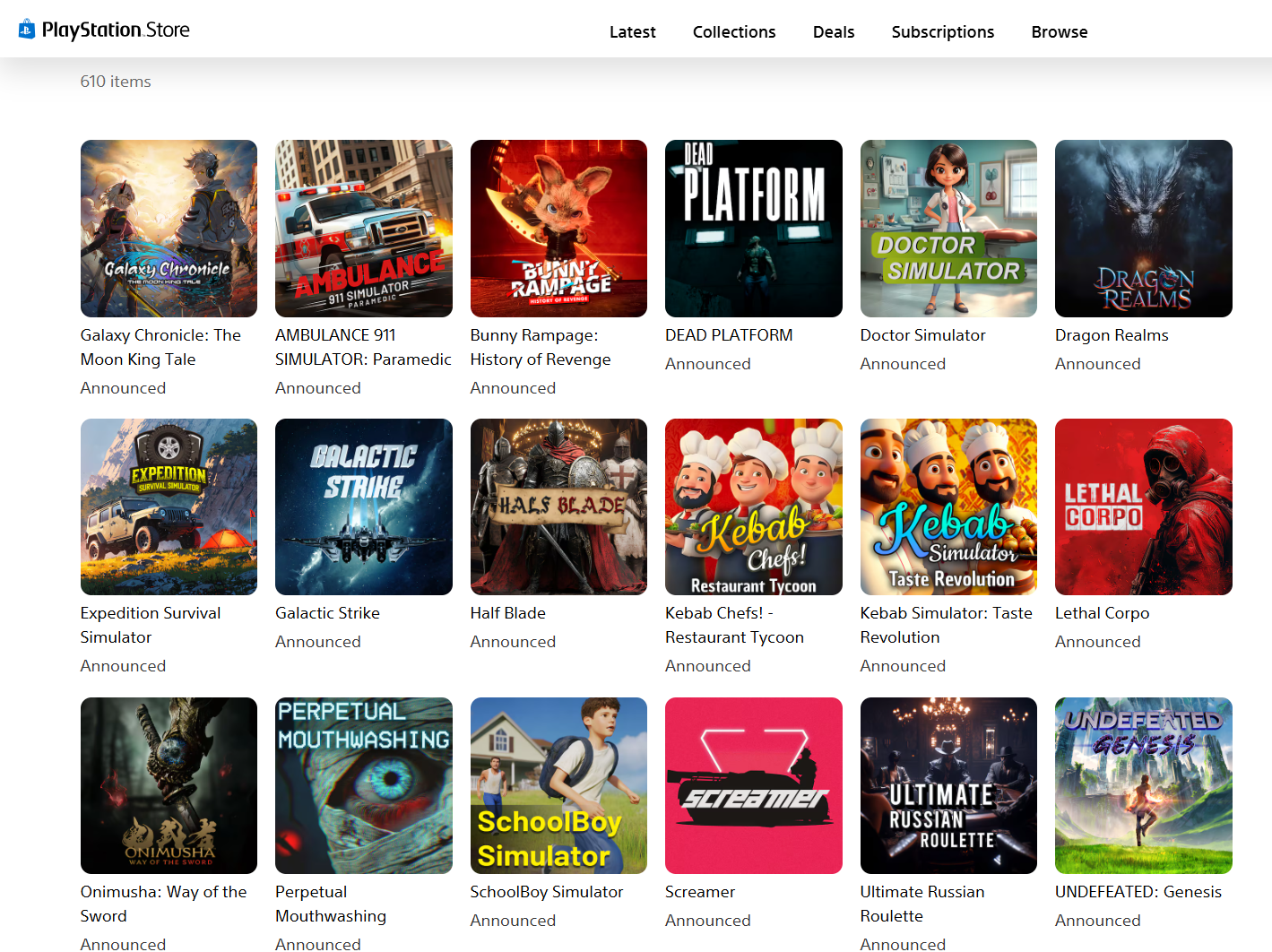
The PlayStation Store and Nintendo eShop are experiencing an influx of low-quality games, often described as "slop," raising concerns among users. These games frequently utilize generative AI for misleading marketing materials and often fail to deliver on their promises. This issue, initially prominent on the eShop, has recently spread to the PlayStation Store, particularly impacting the "Games to Wishlist" section.
The problem isn't simply the presence of bad games; it's the overwhelming volume of strikingly similar, low-effort titles, often simulation games, perpetually discounted, and mimicking popular game themes or even names. Their marketing often features hyper-stylized, AI-generated art that bears little resemblance to the actual gameplay, which is typically plagued by poor controls and technical issues. A small number of companies appear responsible for this prolific output, making them difficult to identify and hold accountable due to a lack of readily available public information.
User complaints have intensified, particularly regarding the eShop's deteriorating performance due to the sheer number of games. To investigate, this article explores the game release process across major storefronts (Steam, Xbox, PlayStation, Nintendo Switch) and why some platforms are more affected than others.
The Certification Process
Interviews with eight game development and publishing professionals (all requesting anonymity) revealed insights into the game release process. Generally, developers pitch their games to platform holders (Nintendo, Sony, Microsoft, Valve), gaining access to development portals and devkits (for consoles). They then complete forms detailing game specifications and undergo certification ("cert"), where the platform holder verifies compliance with technical requirements, legal standards, and ESRB ratings. Age ratings are particularly scrutinized.
Contrary to popular belief, certification isn't a quality assurance (QA) check. It focuses on technical compliance, not gameplay quality. Platform holders often provide limited feedback on submission failures, particularly Nintendo.
Store Page Review
Platform holders require accurate game representation in store page screenshots, but enforcement varies. While Nintendo and Xbox review page changes before launch, PlayStation performs a single check near launch, and Valve only reviews the initial submission. While some diligence exists to ensure accuracy, standards are loosely defined, allowing misleading content to slip through. Penalties for inaccurate information typically involve removal of the offending content, not necessarily delisting the game or developer. Crucially, none of the console storefronts have specific rules regarding generative AI use in games or marketing materials, though Steam requests disclosure.
Why the Discrepancy?
The disparity in "slop" across platforms stems from differences in the approval process. Microsoft vets games individually, whereas Nintendo, Sony, and Valve vet developers. This allows approved developers to easily release multiple games on Nintendo and PlayStation, leading to the current issue. Xbox's game-by-game approach makes it less susceptible. One developer described Nintendo as "probably the easiest to scam." Strategies like perpetually extending discounts and exploiting "New Releases" sections further exacerbate the problem.
While generative AI contributes to the issue, it's not the sole cause. The underlying problem is the volume of low-effort games, regardless of AI use. Xbox, despite potentially being less likely to discourage AI use in the future, appears less affected due to its curation and discoverability features. Steam, despite having a large volume of potentially low-quality games, is less criticized due to its superior search and sorting options, constantly refreshing new releases, and sheer volume of games. Nintendo's eShop, in contrast, lacks effective organization, contributing to the problem.
The Path Forward
Users have urged Nintendo and Sony to address the issue. While Sony has taken action in the past, the long-term solution remains uncertain. Attempts at community-driven filtering, like Nintendo Life's "Better eShop," have faced criticism for unfairly targeting legitimate games. Concerns exist that stricter regulation could inadvertently harm quality software. The challenge lies in balancing the need to prevent misleading marketing with the potential to stifle independent developers. Ultimately, the human element in reviewing submissions plays a significant role, making it difficult to consistently distinguish between genuinely bad games and deliberate attempts at exploiting the system.
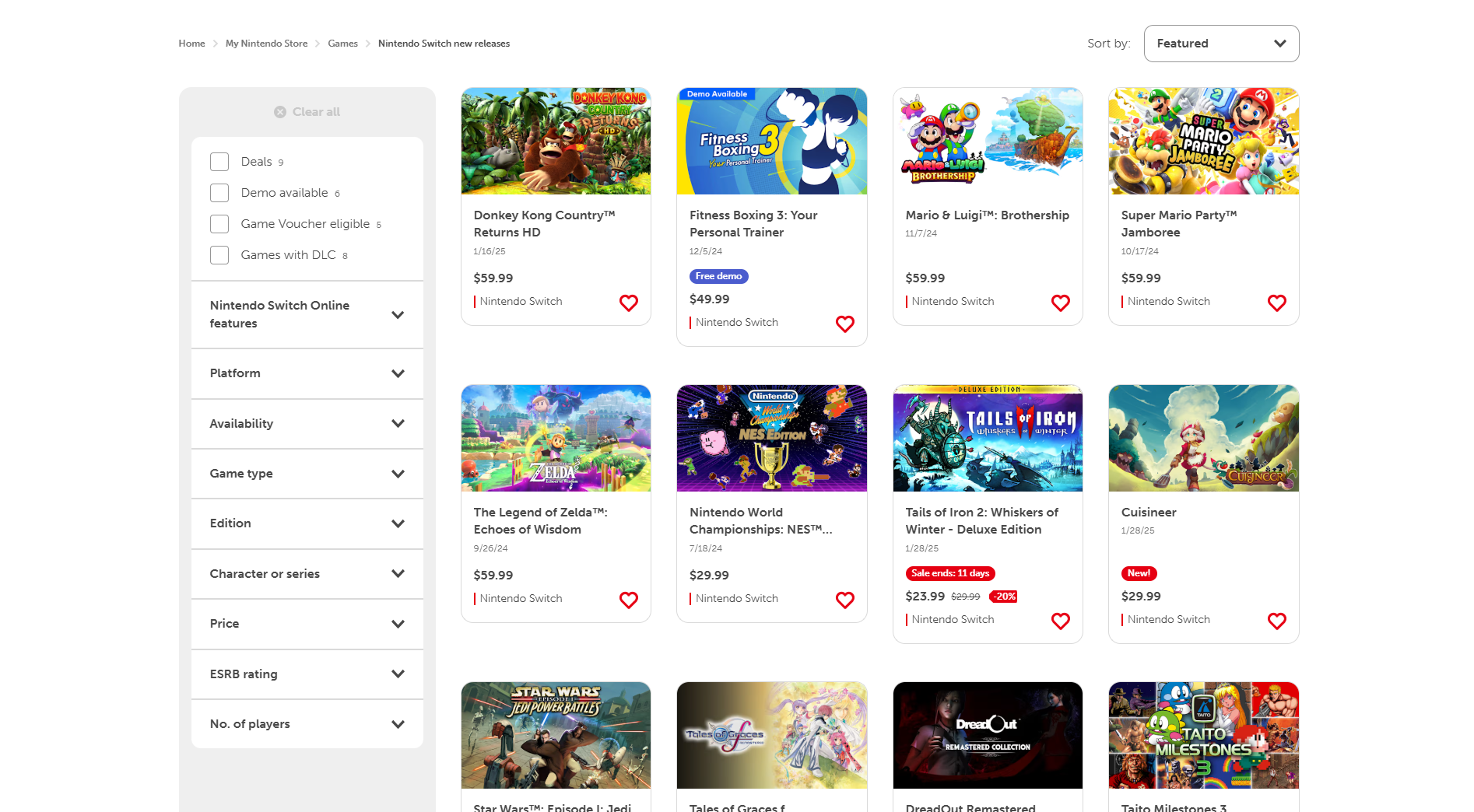
The 'Games to Wishlist' section on the PlayStation Store at the time this piece was written.NIntendo's browser storefront is...fine, honestly?
Resident Evil Survival Unit captured significant attention at the Brazil Game Show.The upcoming strategy spin-off was showcased at this major Latin American convention.Players tried a demo version, providing overwhelmingly positive feedback.Resident
The Warhammer Skulls 2025 gaming showcase concluded with major announcements. Highlights featured the return of Relic’s beloved Dawn of War real-time strategy series, a new Master Crafted Edition of t
During its Black Friday in July Sale, Dell has slashed the price of the new 2025 Alienware Aurora 16 gaming laptop featuring a GeForce RTX 5060 mobile GPU to just $1,099.99, including free shipping. This represents a substantial $400 savings off its
What Duck is an adorable 2D strategy gameLaunching soon on Android and iOS, it stars—what else? Ducks!Build towers, summon units, and defeat enemies before they destroy youFirst crabs, now ducks! Lately, it seems all sorts of animals are making their

 LATEST ARTICLES